
Loading...
Serving San Angelo, TX and surrounding areas. (325) 285-1865
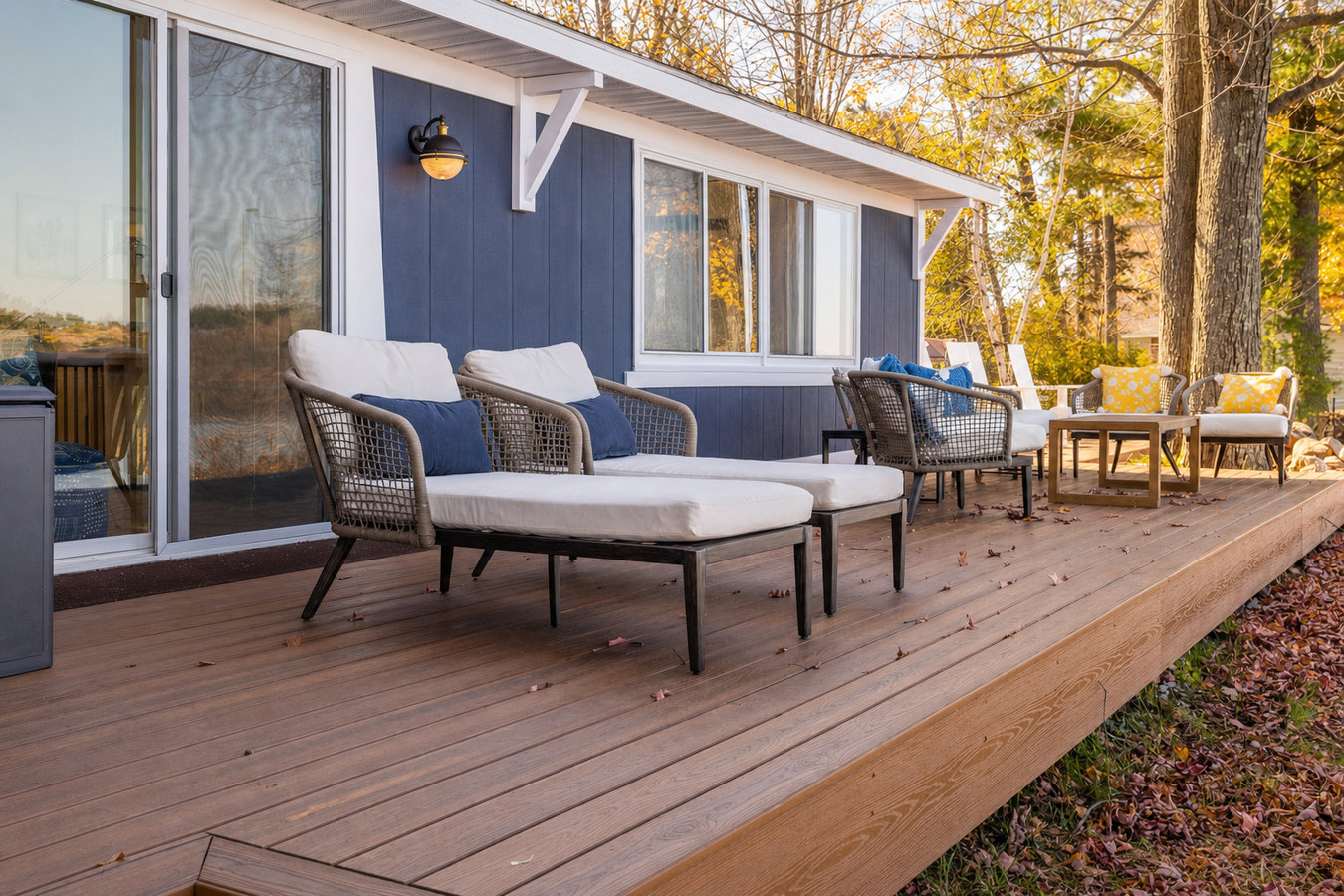
Composite decks handle West Texas heat better than wood, look great without annual staining, and are backed by warranties that last decades - we install them the right way from footings to finish.
Composite deck installation in San Angelo, TX means building a deck using boards made from a blend of wood fiber and recycled plastic - materials that resist rot, splinters, and UV fading without annual staining or sealing. Most standard backyard composite decks take two to five working days to complete once the frame is in place.
San Angelo homeowners often ask us about composite when they are replacing a wood deck that has dried, cracked, or grayed faster than expected in the local heat. The switch to composite solves that problem for good. If you are not sure which direction to go, our Trex deck installation page covers one of the most popular composite brands in detail, and our deck railing installation service covers the railing options that pair with composite boards.
Every composite deck we install starts with a site visit, includes a permit through the City of San Angelo, and finishes with a city inspection sign-off that goes into your home records.
If boards crack along the grain, have gone gray and rough, or flex underfoot when you step on them, the surface is breaking down. San Angelo's intense sun and heat age wood decks faster than in milder climates - what might last 15 years elsewhere can deteriorate in 8 to 10 years here.
If part of your deck sits higher or lower than it used to, or water pools in a new spot, the posts or footings may have moved. This is a known issue in San Angelo's clay-heavy soils. A shifting deck is a safety concern - it typically means rebuilding from the ground up.
If your back door opens onto bare ground or a slab that does not invite you to sit outside, you are missing months of usable living space. San Angelo evenings are warm and pleasant from spring through fall - a composite deck turns that into actual time outside.
Concrete slabs in San Angelo crack over time because of the same soil movement that affects deck footings. If your existing slab has heaved, cracked, or just does not give you enough room, a composite deck built alongside it solves both problems at once.
Our composite deck installation service covers every part of the project - site assessment, design, permit application, framing, board installation, and railing. We work with multiple composite brands so you are not locked into one product line. That includes Trex installation, which we cover in its own page, as well as Fiberon, TimberTech, and other capped composite products. We also install composite and aluminum railing systems - see our deck railing installation page for a full breakdown of railing options.
A composite deck starts with a pressure-treated wood frame - posts, beams, and joists - sized and spaced correctly for the load and for San Angelo's soil conditions. The composite boards go on top of that frame, fastened with either face screws or hidden fasteners depending on the product and your preference. Board spacing is set for thermal expansion, which matters more in West Texas heat than in most other climates. We do not cut corners on spacing or fastening because those are the things that determine whether your deck looks great in five years or starts to buckle and gap.
A protective outer shell over the composite core - capped products resist staining, fading, and moisture better than uncapped boards, and they tend to stay cooler underfoot in the Texas heat.
Trex is the most recognized composite brand nationally. We install the full Trex product line including Select, Enhance, and Transcend series boards.
Fiberon products offer competitive warranties and strong resistance to fading - a good option for homeowners focused on long-term color retention.
Hidden fasteners give the deck surface a clean, boardwalk look with no visible screw heads. They also make board replacement easier if a single board ever needs to come out.
Composite and aluminum railings require zero maintenance - no painting, no sealing, no replacing rotted posts. They pair cleanly with composite boards and meet San Angelo building code requirements.
Most decks that are elevated more than a step above grade need stairs. We design and build stair systems that are code-compliant, safe, and proportional to the deck.
San Angelo regularly sees summer temperatures above 100 degrees, and composite boards expand and contract more than wood does with those temperature swings. Proper board spacing during installation is not optional here - it is what keeps your deck from buckling in July or developing gaps by October. A deck contractor who installs composite in a moderate climate and then applies the same spacing to a San Angelo deck will get different results. We account for West Texas thermal expansion on every board we lay. Homeowners in San Angelo and out in Grape Creek have the same soil and climate conditions, and we build for both.
The second San Angelo-specific factor is the soil. Much of Tom Green County sits on expansive clay that swells when wet and shrinks in dry heat. Deck posts need to be set below the active soil zone - the depth where the ground actually moves with moisture changes. If footings are too shallow, the deck can shift, causing boards to separate and railings to lean over time. We dig to the right depth for local conditions on every project, and we ask the city inspector to verify the footings before we pour concrete.
We respond within 1 business day. The initial call is short - we ask about your yard, roughly how large a deck you are thinking about, and whether you have any HOA rules to work around. We schedule a site visit from there. No commitment required.
We come to your home, measure the space, and talk through composite product options that fit your budget and how you plan to use the deck. You receive a written, itemized estimate - not a ballpark. This visit typically takes 30 to 60 minutes.
Once you approve the design and sign a contract, we submit the permit to the City of San Angelo. This adds a few business days to a couple of weeks before construction starts. We handle the paperwork - you can ask us for the permit number once it is filed.
The crew frames the deck, lays the composite boards, installs railings and stairs, then does a final walkthrough with you. A city inspector visits to verify the structure before you receive the final sign-off document. Keep that document with your home records.
We respond within 1 business day. There is no obligation - just a straight answer about what your project would cost and how long it would take. After you submit, someone from our team will call to schedule your on-site estimate.
(325) 285-1865Composite boards expand in high heat. We set board gaps to account for San Angelo's summer temperatures - not a national average. That means your deck surface stays flat and tight when July hits 105 degrees, not just when it is comfortable outside.
Tom Green County sits on shrink-swell clay. We dig post footings below the active soil zone on every project so the deck stays level through the wet-dry cycles this area goes through every year. It is a detail that separates a deck that lasts from one that shifts.
We apply for the permit, coordinate with city inspectors, and hand you the final inspection sign-off when the job is done. That document is important - it proves the deck was built to code, which matters when you sell the home.
We install Trex, Fiberon, TimberTech, and other composite brands. We will tell you which product makes sense for your budget and your situation - not just whichever one has the best contractor margin. Ask us for a product comparison during your site visit.
The International Association of Certified Home Inspectors (InterNACHI) publishes a deck inspection guide that outlines what a properly built deck frame looks like - the right joist spacing, the right connectors, the right post depth. We build to those standards on every San Angelo project, and a city inspector verifies the critical structural elements before we pour concrete.
Trex is the most recognized composite brand in the country - our dedicated Trex installation page covers the full product line, series comparisons, and what Trex costs in San Angelo.
Learn MoreRailings are required on most elevated decks and are one of the biggest variables in final project cost - our railing page covers composite, aluminum, and cable options.
Learn MoreSan Angelo deck builders fill their schedules quickly from March onward. Reach out today to lock in your project date before the rush.